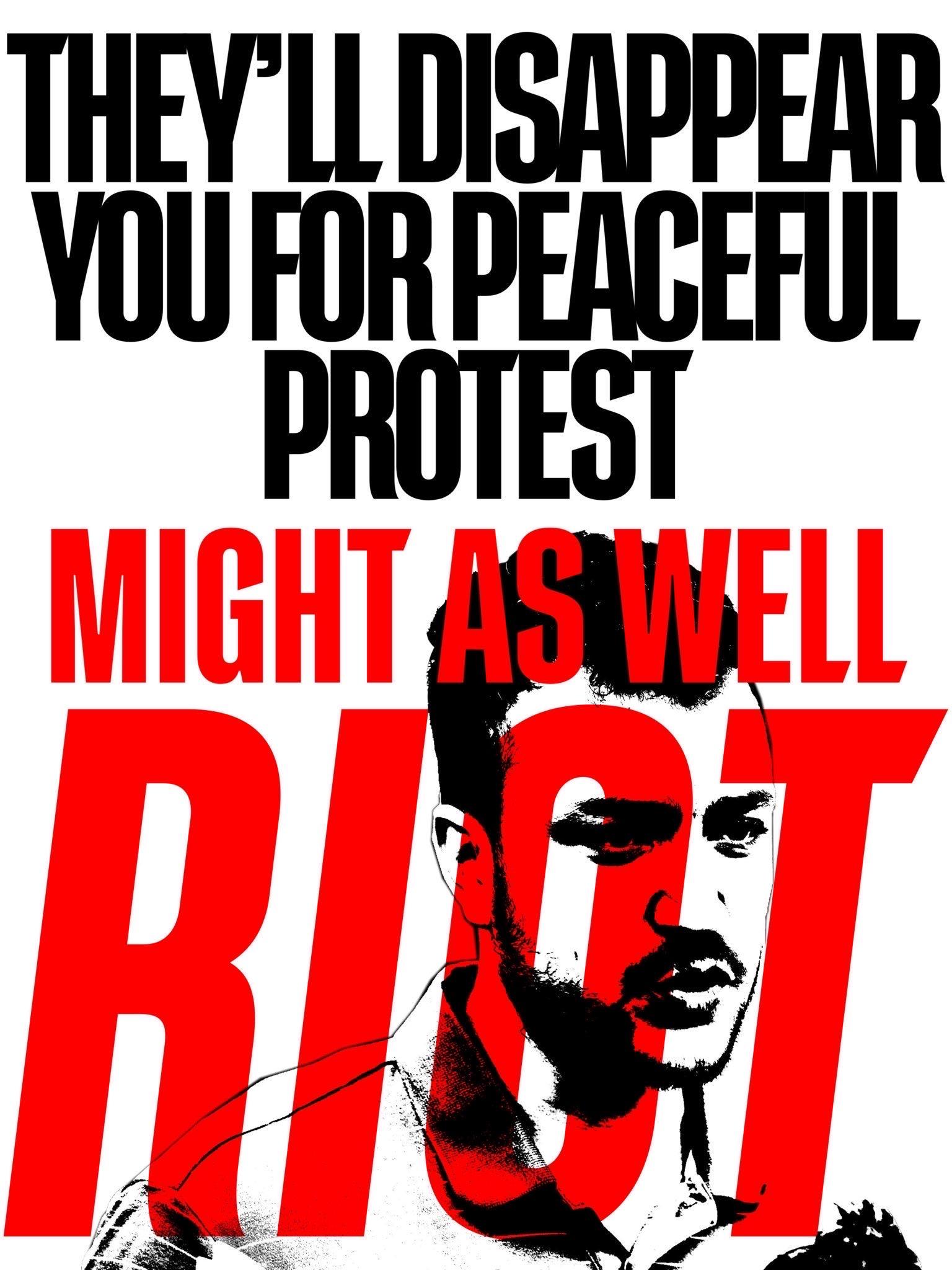
The following piece was forwarded to us by a comrade in response to the article “The Center Cannot Hold” by K. & T., which we published in early February following the murder of Alex Pretti. If you want to submit a response to anything on our blog, send us an email! Better yet, host it on a website of your own, and then email us!
– Lake Effect Collective
Thoughts on “The Center Cannot Hold” by Emerson, Lake, and Palmer Effect
In “The Center Cannot Hold,” the authors argue that “it is impossible to turn the ICE struggle we find already underway into a revolutionary struggle,” because of the predominantly white and middle-class “composition and politics” of the majority of the rapid response networks in the Twin Cities.
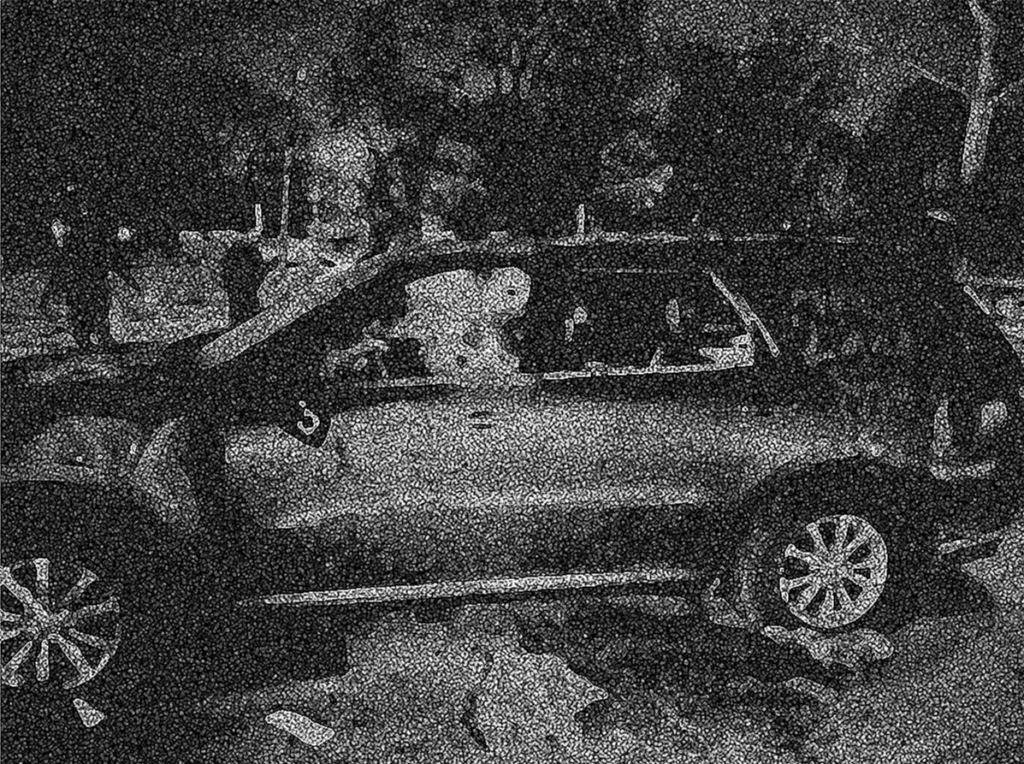
Perhaps. But first, we should note that, at crucial junctures — for example, when a crowd chased off ICE agents and looted their cars on the night of January 14 — the people who pushed the movement across the threshold skewed less white and middle-class. We’ll return to this below.
At the same time, we should avoid mechanistic or deterministic frameworks regarding what we can expect from people. The middle class itself is being hollowed out — and the introduction of A.I. is only going to speed that process. Surely many people in the anti-ICE movement are not just being charitable but understand that economic precarity and state violence will eventually impact them, too.
The authors of the text assume that the interests of the anti-ICE movement can be reduced to a kind of Constitutionally-minded reformist abolitionism that politicians like Governor Pritzker can adequately represent. But the ways that Pritzker, Walz, and Frey are all implicated in maintaining the prevailing order — for example, by consistently supporting ICE with local and state police — constitute a genuine fault line in the anti-ICE movement, one that can’t easily be resolved. As it stands, the Democrats in Congress show no signs of making any real effort to abolish ICE in the foreseeable future, and as long as that is the case, the consequent cognitive dissonance for the half of the population that would like to see ICE abolished will compel people to either retreat into apathy or continue radicalizing. This goes for liberals, as well.
The demographic of predominantly white middle-class retirees consistently outperformed radicals and people from more oppressed demographics in street mobilization between January and May 2025, as well, powering the “Tesla takedown” demos. Still being invested in “democracy,” they still believed that they had something to lose under Trump 2.0, whereas everyone else was already disillusioned. Until we can outdo them with our own organizing, we must acknowledge that they represent one of the active forces on the streets, and analyze why they have been able to act when we could not.
We can agree with the authors that it’s defeatist to simply complain about our movements being co-opted. But it is also defeatist to write off tens of millions of people and the more or less horizontal and direct-action-based movements that they participate in as having no revolutionary potential.
As the authors argue, we should make anarchist proposals thinkable to people, both via word and deed. At the same time, as economic and political upheavals continue to play out, we should not take for granted that those who are liberals today will all be liberals tomorrow. Our job is not just to “compel [people] to choose sides, either with the vestiges of the liberal political class, or with the millions of people yet to be activated” — it is to make sure that they choose the side of liberation. Our task is not just to draw lines, but to change where they can be drawn.
This is important, among other reasons, because there are still more predominantly white liberals than there are, e.g., undocumented immigrants. Proper solidarity with the latter means changing the allegiances of the former, however difficult that is to imagine.
Some of the essential elements that we will need to take on the repressive apparatus of the state in the foreseeable future include:
- Widely shared reference points and precedents demonstrating what people can do in the streets together
- Networks capable of acting together
- Communications infrastructure (yes, this currently means the “endless Signal loops” that the authors complain about) that enables people to receive information quickly and act on it
- Values and experience that render people resistant to attempts to impose vertical structures and reformist horizons on them
The more widespread these are, the more effectively we will be able to counter the violence of the state. Both the 2020 uprising and the inspiring movement in Minneapolis these past months showed that the models of horizontal organizing and direct action that anarchists have been experimenting with for years can accomplish incredible things, but it is only possible to see what they can do once enormous numbers of people get involved outside of our subcultures. If Democratic politicians and authoritarian left organizers manage to draw everyone into their networks and communications infrastructure, not only will this marginalize anarchists, but it will also enable the administration to triumph against resistance movements, which will be undermined from above. We need to very clearly make this argument to everyone; today, at last, it should be easy to show it to be true.
When we address recently radicalizing liberals and ex-liberals, one of the most important things to convey is that if they want to participate in an effective resistance to Trump, that will necessarily involve working-class and underclass people and communities on the receiving end of racialized violence. Likewise, for this to be possible, an effective resistance movement will have to prioritize the needs, perspectives, values, and tactics that those demographics bring to it. We saw in 2020 how powerful a resistance movement can become when it does so. If downwardly mobile liberals do not wish to live in an autocracy, they will have to set aside their economic and racial interests as they have known them up to this point and begin to think about what it could look like to fight alongside those who have it worse than them.
This isn’t happening on a large scale yet, but it could.
How to accomplish that, of course, is an open question. It will almost certainly be easier to mobilize people who have it worse than liberals to create a situation that will drag liberals along in their wake than it will be to compel liberals to escalate all by themselves. Again, the events of January 14 in North Minneapolis seem to bear that out — but if that is our reference point, the implication is not that we should stand aside from the anti-ICE movement, expecting nothing from it, but rather that we should look for those who are prepared to risk the most in it, and act alongside them to push the envelope.
Emerson, Lake, and Palmer Effect